Clinical Manya Basti
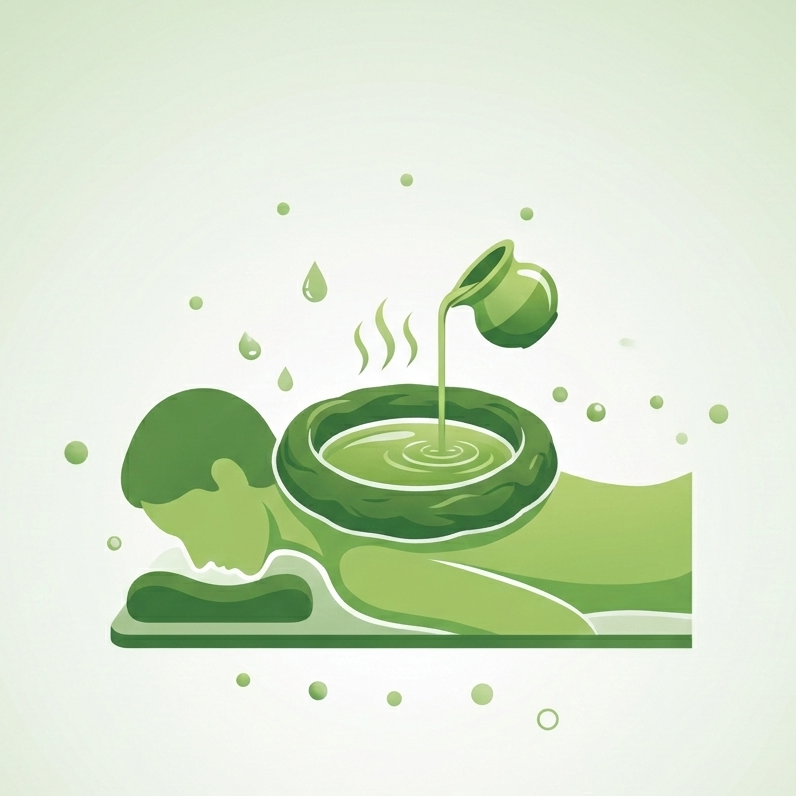
Manya Basti is a specialized neck and shoulder therapy targeting the delicate cervical vertebrae, muscles, and nerve roots. Warm, herbal oils are retained in a therapeutic reservoir over the neck region, releasing deep-seated tension and restoring natural mobility to this vital area.
Benefit Summary
- Complete release of chronic neck tension
- Elimination of cervical spine pain and stiffness
- Prevention of nerve compression and radiating arm pain
The Clinical Pathway
Herbal Oil Application
Ayurvedic herbal oils, selected for their anti-inflammatory and nerve-calming properties, are gently warmed. The neck and shoulder area is prepared with light massage.
Cervical Retention
A specially designed oil containment (leather or cloth dam) is created around the neck and shoulders, allowing warm medicated oils to seep into cervical discs and nerve channels for 20-30 minutes.
Gentle Mobilization
After treatment, gentle neck stretching and mobilization exercises restore full range of motion. Most patients experience dramatic relief even from the first session.
Clinical Indications
Cervical Spondylosis
Degenerative joint disease of the neck with bone spurs and vertebral compression.
Text Neck & Postural Strain
Modern tension from prolonged device use and poor sitting posture.
Tension Headaches & Migraines
Head pain originating from tight neck muscles and cervical tension.
Whiplash & Traumatic Injury
Recovery from car accidents, sports injuries, and sudden neck trauma.
The Patient Experience
You will lie in a comfortable position as a specialized oil dam is gently positioned around your neck and shoulders. Warm, medicated oils pool in this therapeutic containment, softening tight muscles and deeply nourishing the cervical spine. As tension melts away, you'll experience profound relief and restored neck freedom.
Expert Insight
Dr. Patki explains: "The neck is where stress literally gets 'stuck.' Manya Basti works by flooding tight cervical muscles with anti-inflammatory oils that cannot reach these areas through normal circulation. The result is rapid release of nerve compression and restoration of full pain-free mobility."
Patient Protocol
- Avoid sudden neck movements or turning for 2 hours post-treatment.
- Keep your neck warm. Use a scarf in cold weather and avoid air conditioning.
- Practice gentle neck range-of-motion exercises 3-4 hours post-session.
Home Remedies for Neck Wellness
Warm Oil Neck Massage
Ingredients: 3 tbsp warm sesame oil, 3-4 drops eucalyptus oil
Massage warm sesame oil mixed with eucalyptus on your neck and shoulders daily. Use slow, upward strokes toward the head. This releases muscle tension and improves circulation.
Ginger-Turmeric Tea
Ingredients: 1 tbsp fresh ginger, 1/2 tsp turmeric, 1 cup water, lemon, honey
Boil ginger and turmeric in water for 5 minutes. Add lemon and honey. Drink twice daily. This reduces cervical inflammation and improves nerve function.
Thermal Compress Therapy
Ingredients: Hot water bottle or herbal heat pad, cloth
Apply a warm compress to the neck and shoulders for 15 minutes, 2-3 times daily. Heat penetrates deep muscle layers and relaxes spasm patterns.
Ashwagandha Tonic
Ingredients: 1 tsp Ashwagandha powder, 1 cup nut milk, honey, dates
Mix ashwagandha in warm nut milk with honey. Drink before bed. This adaptogenic reduces stress-related neck tension and support nervous system health.
Daily Tips for Cervical Health
Monitor Positioning
Keep screens at eye level, 20-24 inches away. Take 20-second breaks every 20 minutes to look at distant objects (20-20-20 rule).
Posture Awareness
Maintain shoulders relaxed, ears over shoulders, chin parallel to ground. Avoid slumping or forward head posture during seated work.
Neck Strengthening
Perform isometric neck exercises: gentle resistance against hand pressure in all directions, 3 times daily for cervical stability.
Gentle Stretching
Perform slow neck rotations, lateral flexion, and forward flexion stretches. Hold each 15-20 seconds, 2-3 times daily for tension release.
Breathing Exercises
Practice deep diaphragmatic breathing. This oxygenates cervical muscles and activates parasympathetic relaxation response.
Pillow Support
Use an ergonomic pillow that maintains natural cervical curve. Avoid too-high or too-low pillows that strain the neck during sleep.